Transform complex support workflows
Enterprise IT Support in 2026: What AI Agents Actually Change
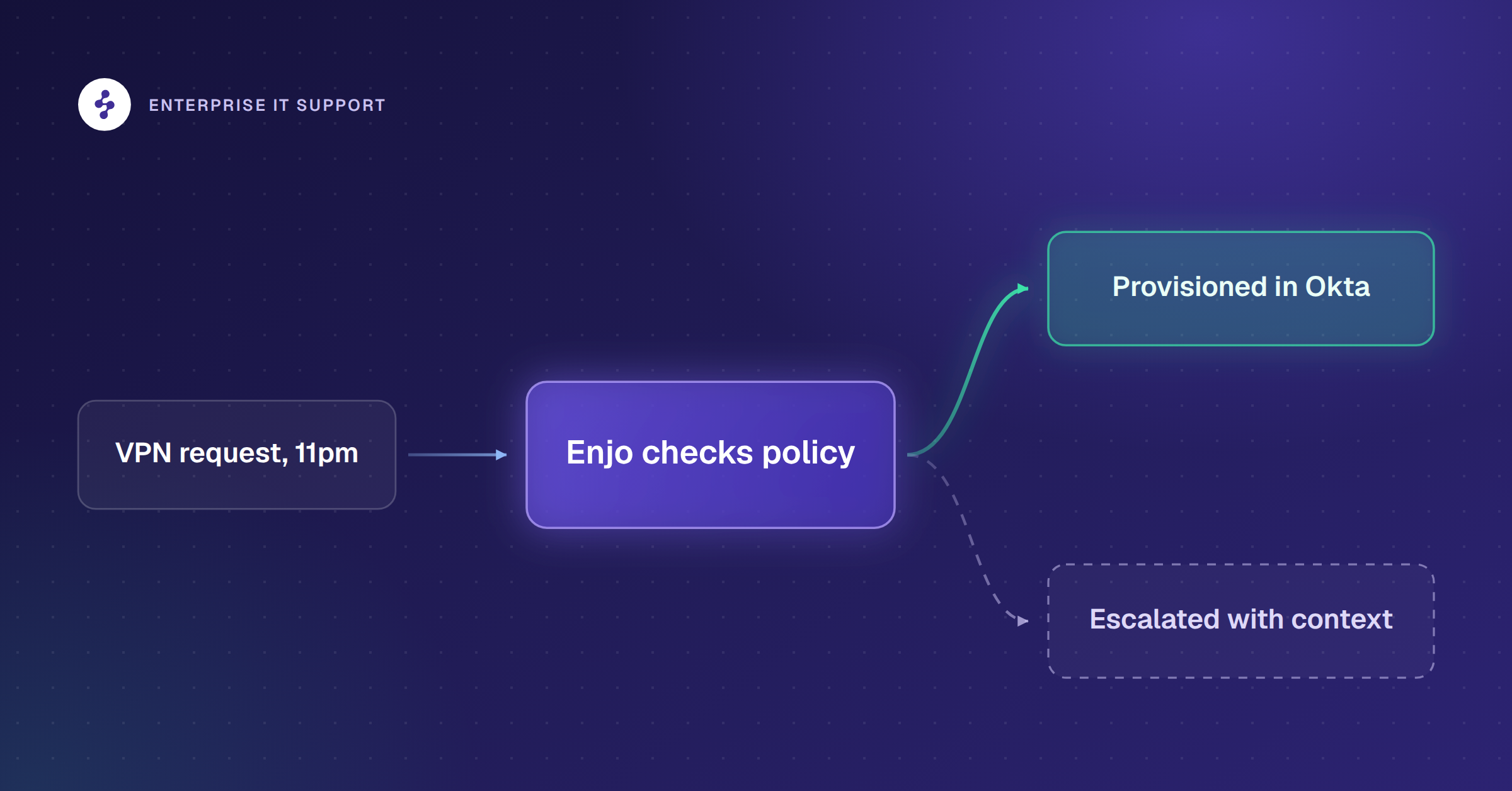
An employee messages the IT channel at 11pm asking for VPN access. Under a traditional enterprise IT support model that request waits until morning, gets triaged, gets assigned, and closes two days later. Under an AI agent it gets verified against policy, provisioned in Okta, logged in Jira and confirmed in the same thread, before the person has closed their laptop.
That gap is the whole argument, and it only holds for a specific class of request. This guide covers where AI agents genuinely change IT support, what the numbers look like in named deployments, and which requests should still reach a person first.
Enterprise IT support changes when routine requests resolve without a queue. Start free at enjo.ai to measure it on your own tickets.
What Production Actually Looks Like
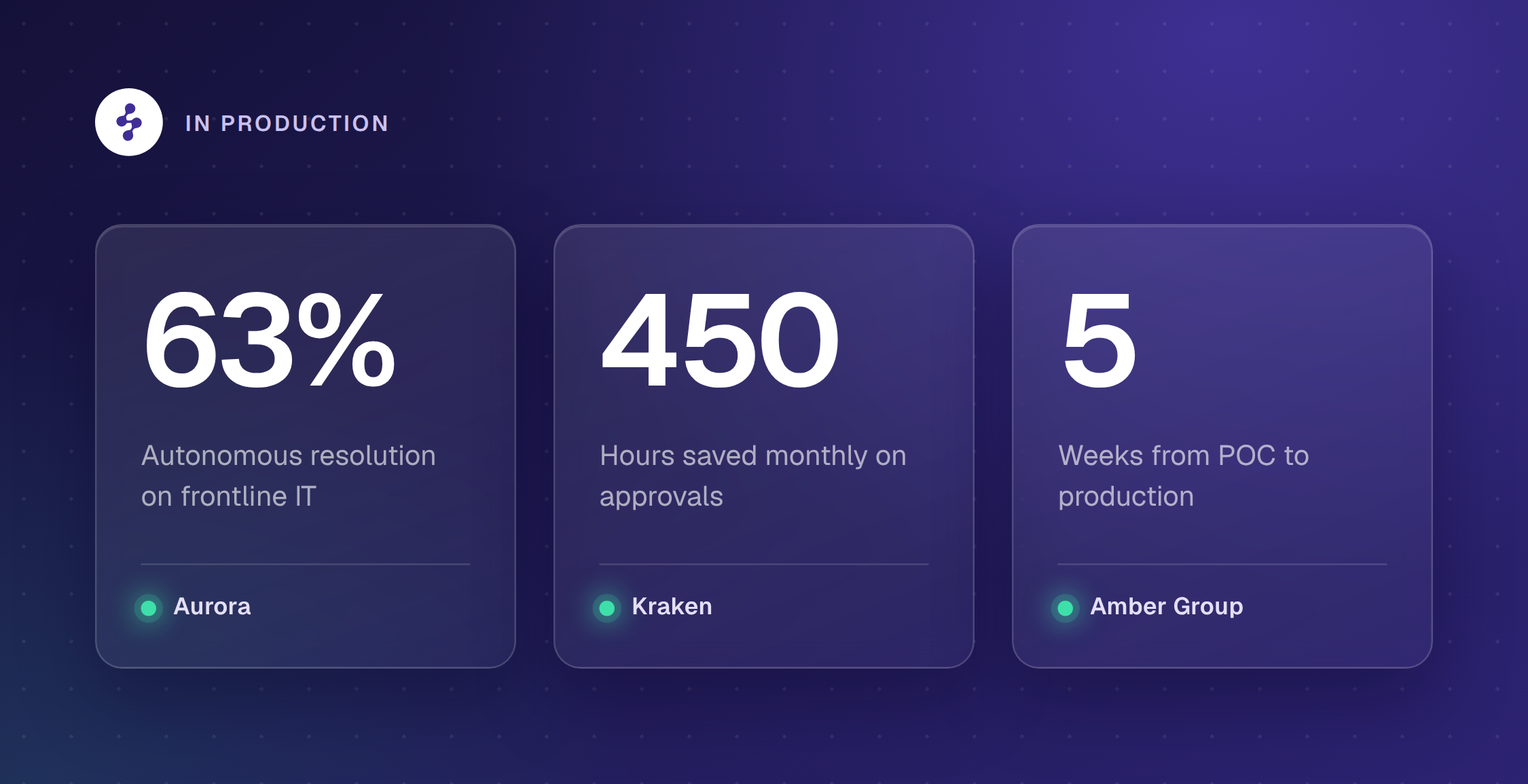
Aurora, a 2,500-employee autonomous vehicle company, reached 63% autonomous resolution on frontline IT requests, alongside a 60% ESAT improvement and 45% faster resolution.
Kraken automated HR approval workflows and saves 450 hours a month, moving response times from two to three days down to minutes, with 80% of employees self-serving HR queries. The pattern is identical for IT access and provisioning requests.
Amber Group went from proof of concept to full production in five weeks.
BookMyShow captures 100% of IT tickets through Slack, with zero manual ticket creation. Our guide to Jira ticketing in Slack covers how that pattern is set up.
None of these teams started where they finished. Every one began with a narrow, high-volume request type and expanded when the number held. Full case studies cover how each sequenced it.
Where AI Agents Change Enterprise IT Support
Resolution, Not Routing
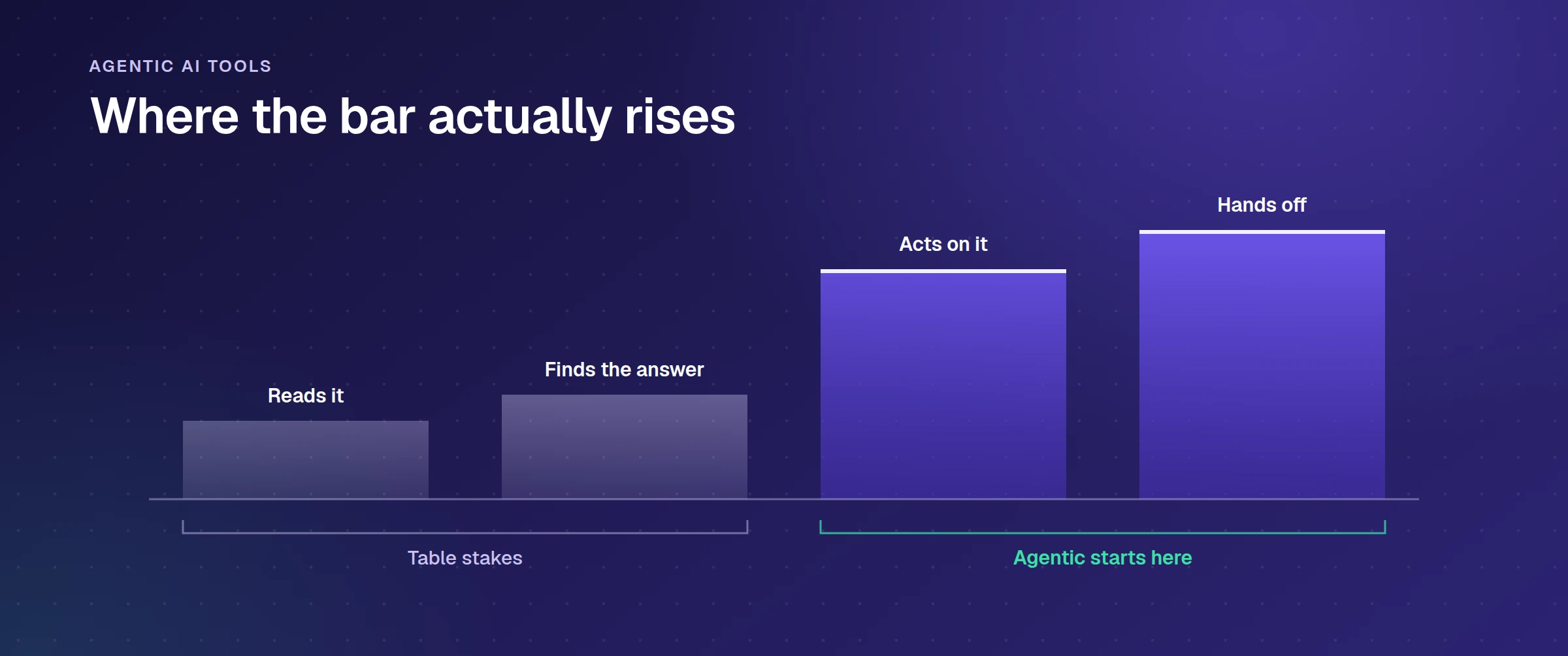
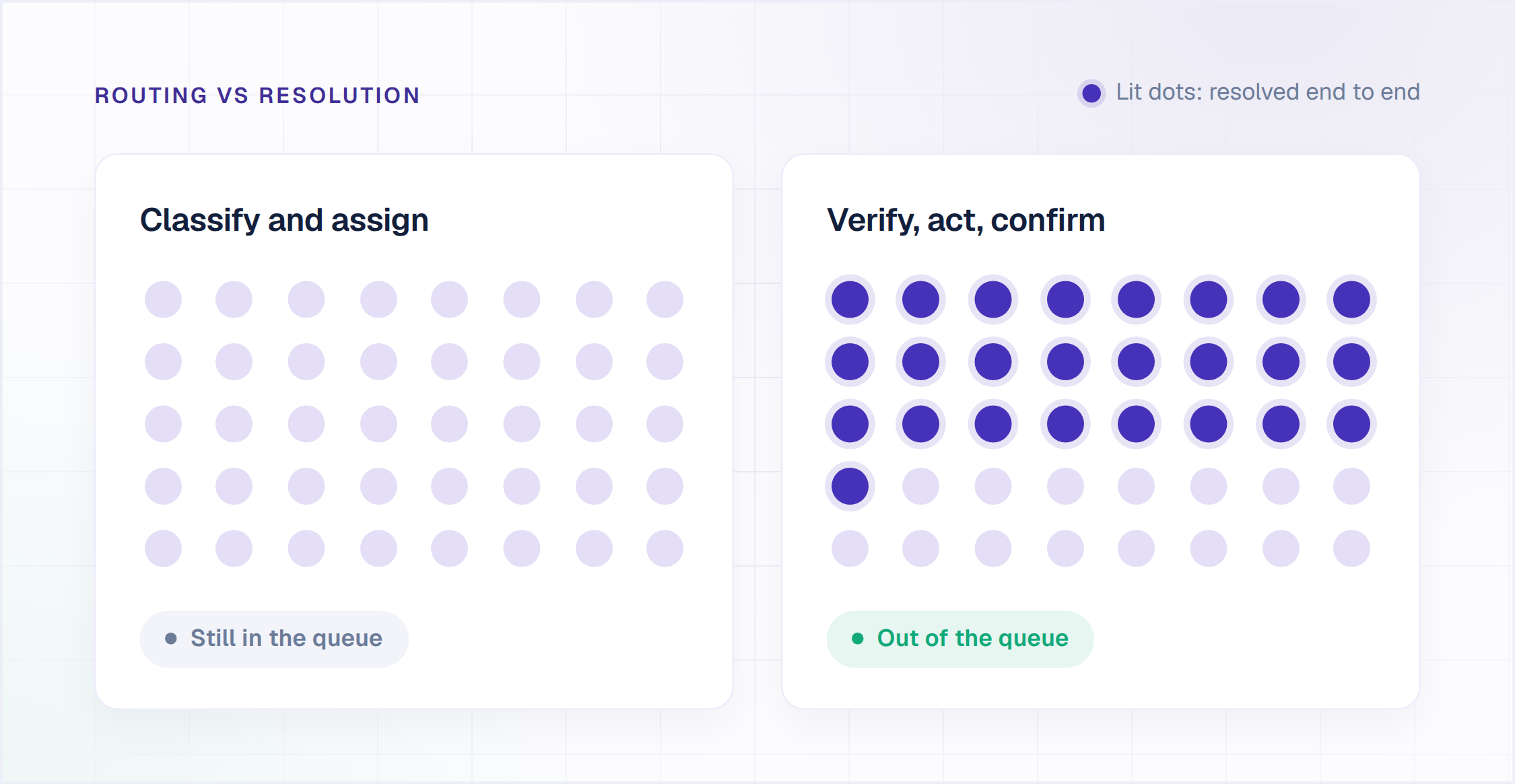
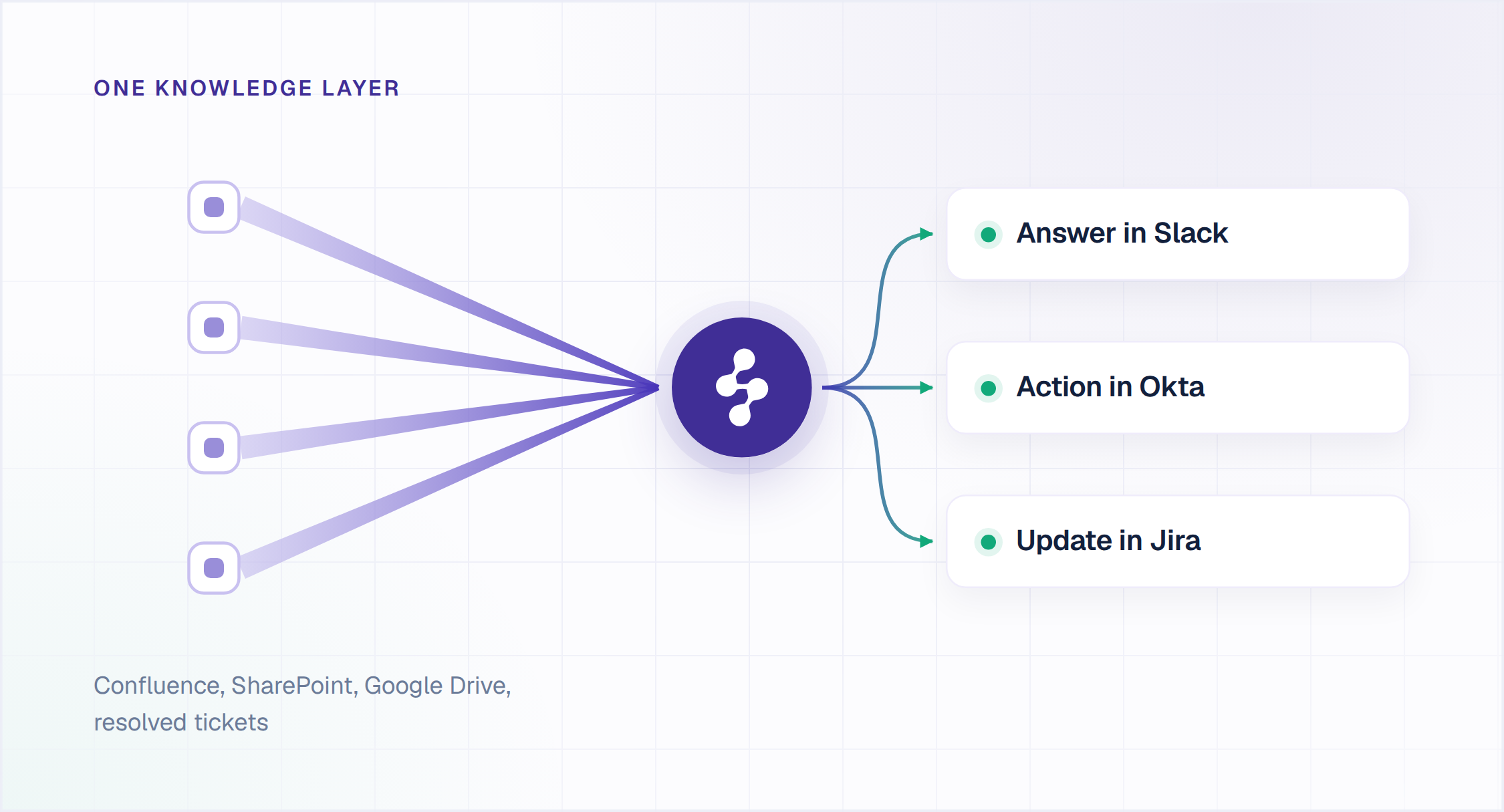
The distinction that matters is whether work leaves the queue. A system that classifies a ticket and assigns it to the right group has reshaped the work. A system that verifies the requester, checks the access policy, performs the change in Okta, updates the Jira ticket and confirms in Slack has removed it.
That requires three things working together: retrieval that reaches your actual knowledge, deterministic execution in connected systems, and an escalation path for anything the agent is not confident about. Our guide to AI support agents covers how the agent layer itself works, and Enjo's AI Agent is the implementation. Our guide to agentic workflows covers how those sequences are built and governed. The measured benefits of AI support agents across four live deployments show what that produces.
The Requests That Automate Cleanly
Password resets, software access, VPN issues, licence provisioning, group membership, and onboarding task sequences. These share a shape: high volume, rule-bound, and with a documented answer. They are where Aurora's 63% came from, and they are where any deployment should start.
The Requests That Should Not
Anything without a documented answer. Anything legally or contractually sensitive. Anything where the resolution depends on judgement about an exception. Automating these does not save time, it manufactures escalations with a worse starting point than if a person had taken the request first.
Hybrid Work and Context
Distributed teams make context expensive. An agent that knows the requester's device, OS, location and access level resolves faster than one asking three clarifying questions first, and the difference compounds across thousands of requests. That context comes from identity and asset integrations, not from the model. Our breakdown of how an AI service desk works covers the mechanics underneath.
Escalation Is the Part Most Deployments Get Wrong
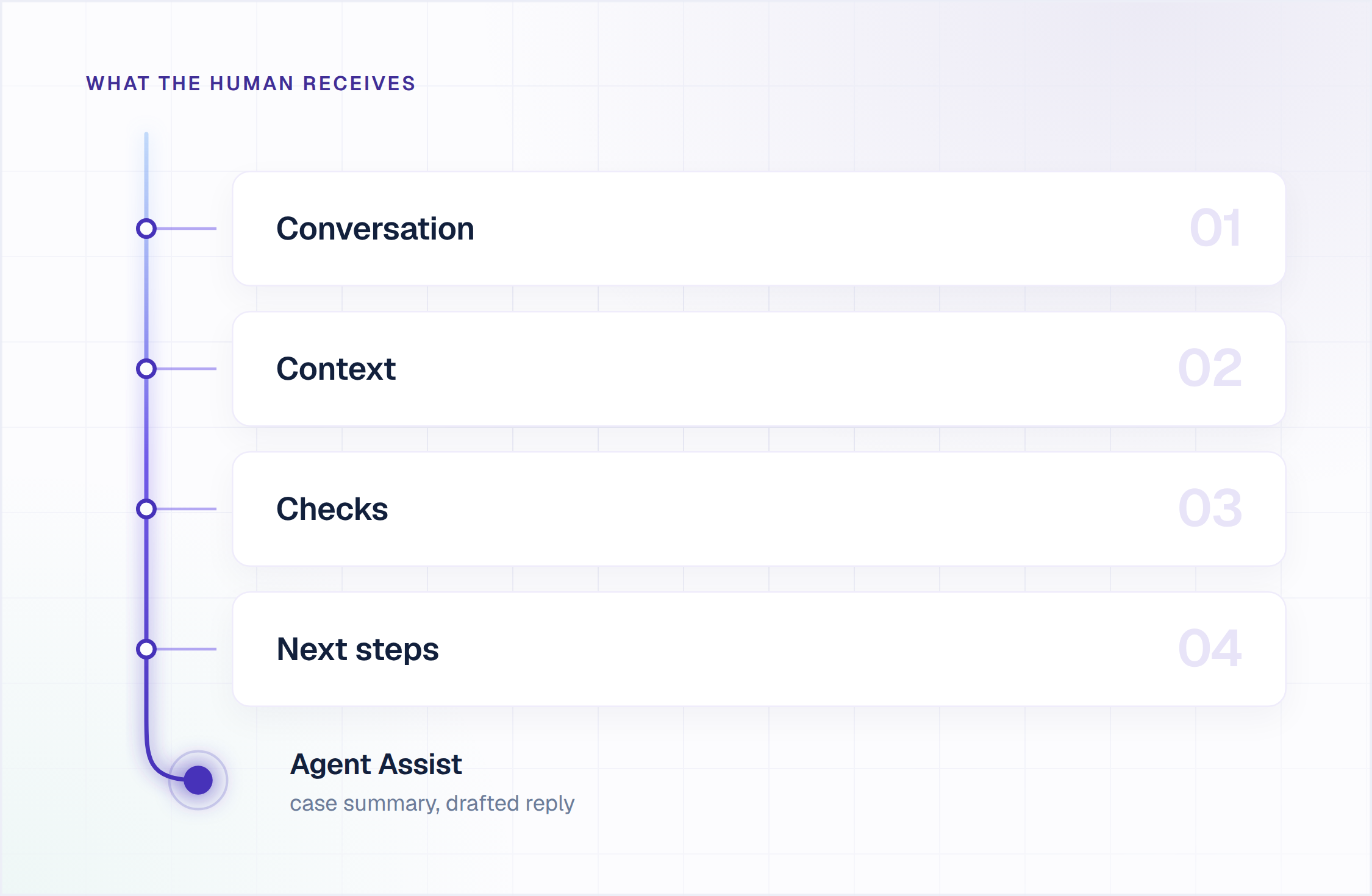
Every AI agent escalates something. What the human receives on handoff decides whether the deployment reduces workload or moves it.
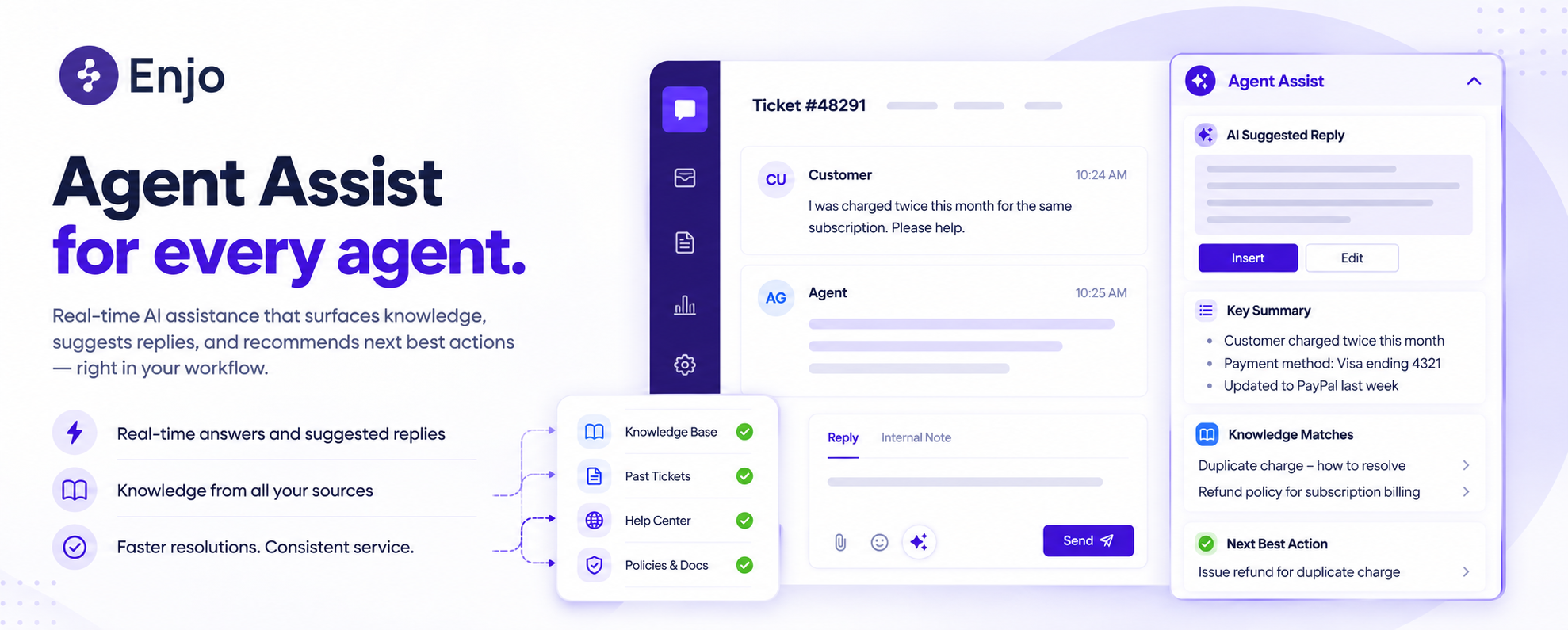
A weak handoff delivers a ticket and a transcript. A strong one delivers the conversation, the requester's account context, what the agent already checked, and the next steps it had planned. Agent Assist sits on the receiving end of that, surfacing the case summary and a drafted reply inside the agent's existing ticket view.
The metric worth tracking is how often a human restarts a conversation the agent began. It affects IT workload more than resolution rate does, and almost nobody measures it.
What the Research Says, and What It Does Not
Gartner predicts agentic AI will autonomously resolve 80% of common customer service issues without human intervention by 2029, with a 30% reduction in operational costs.
Set against that, Gartner also predicts over 40% of agentic AI projects will be canceled by the end of 2027, on escalating costs, unclear business value or inadequate risk controls. And Forrester's 2026 assessment found roughly three-quarters of enterprise leaders reporting agentic AI adoption while only a small minority ran it in meaningful production.
Three things separate the projects that survive: a narrow first use case, a measurable definition of done, and guardrails defined before scale rather than after. Our explainer on agentic AI covers why the architecture matters more than the model.
You will find figures circulating in this category that we have deliberately not used, including ticket-volume averages and satisfaction benchmarks attributed to analyst firms with no report title attached. Use your own baseline instead. It is the only comparison that holds up in a budget conversation.
Governance, Because IT Buys It Last
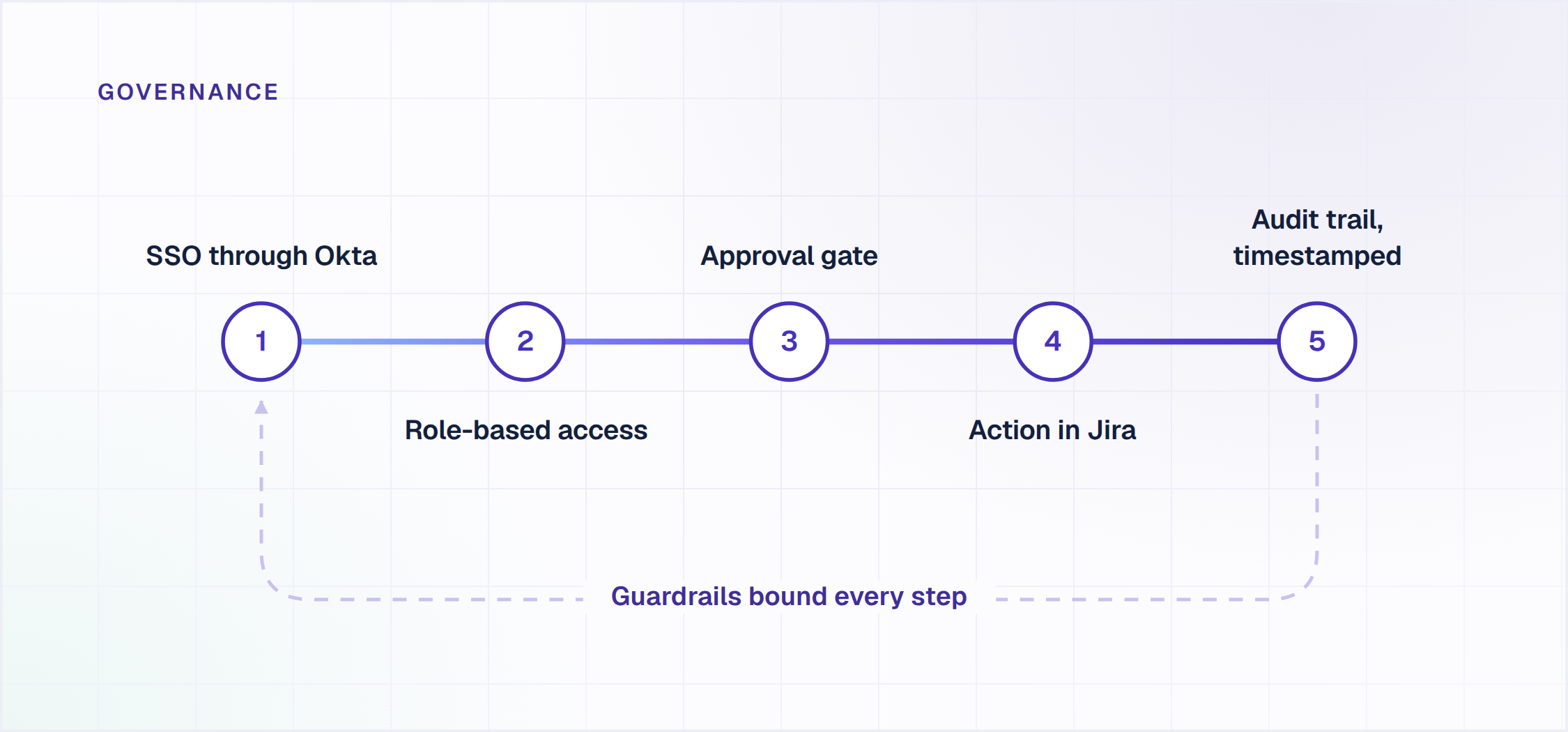
An agent acting inside Okta, Jira and ServiceNow is doing privileged work, which puts security in the approval path.
Identity and permissions. SSO through Okta or Azure AD, with role-based access so an agent cannot retrieve or act on something the requester could not. Audit trail recording who triggered a workflow, every step, inputs and outputs, approvals and failures, with timestamps. Policy enforcement so sensitive actions require approval, and Guardrails block responses outside approved knowledge.
Enjo runs on SOC 2 Type II, ISO 27001 and GDPR compliance, with full audit trails across Slack, Microsoft Teams and its automation engine.
How the IT Role Changes
Volume framing matters here. AI absorbs the requests that repeat, so people work the cases that need judgement. That is a capacity change, not a headcount one.
What that looks like in practice: less time on password resets and access requests, more on architecture, security posture, vendor consolidation and the automation programme itself. The teams doing this well have someone explicitly owning the agent's knowledge quality, because the ceiling on resolution is documentation, not the model. Our AI knowledge base guide covers how to structure that layer.
Getting Started
Rank your request types by volume. Pull 90 days of ticket history. A small number of request types usually carries a disproportionate share.
Connect the knowledge that answers them. Confluence, SharePoint, Google Drive, past resolved tickets. The ceiling on any automation is what it can reach, so connecting one source gets you a fraction of the resolution rate. Enjo's integrations cover ticketing, knowledge, channels and action targets.
Wire one action, not five. Pick the single highest-volume request and automate it end to end, including the failure path. If you are still choosing the platform underneath, our comparison of ITSM tools covers the options.
Design the escalation before the automation. Decide what a human receives when the agent is unsure, and build that first.
Measure resolution, then expand. Add the next request type when the first one holds. If ServiceNow is your platform, our ServiceNow AI agents buyer's guide covers what to evaluate before committing budget.
Start With One Request Type
Enjo has a permanent free tier with 200 AI Replies a month and unlimited seats, which is enough to test one request type end to end before any procurement conversation. Full pricing is published, and enterprise terms cover procurement, security review and deployment support. Run it against your own ticket history before the first procurement conversation.

Frequently Asked Questions
What is enterprise IT support?
Enterprise IT support is the function that handles technology requests and incidents across a large organisation: access provisioning, device and software issues, network problems and onboarding. At enterprise scale it is defined less by the problems themselves than by volume, compliance requirements and the number of systems each request touches.
How do AI agents change enterprise IT support?
They resolve routine requests end to end rather than routing them. An agent verifies the requester, checks policy, performs the action in Okta, Jira or ServiceNow, and confirms back in the channel. Aurora's IT team reached 63% autonomous resolution this way. What the agent cannot resolve escalates with full context attached.
Which IT requests should be automated first?
High-volume, rule-bound requests with a documented answer: password resets, software access, VPN issues, licence provisioning and group membership. Avoid starting with anything requiring judgement about an exception or carrying legal or contractual sensitivity.
Do AI agents replace IT staff?
No. They absorb the repetitive volume so people work the cases that need judgement. It is a capacity change rather than a headcount one, and the teams seeing the best results assign someone to own the agent's knowledge quality, since documentation rather than the model sets the ceiling on resolution.
What security does an enterprise IT agent need?
SSO, role-based access so the agent cannot act beyond the requester's own permissions, a complete audit trail with timestamps, approval gates on sensitive actions, and guardrails restricting responses to approved knowledge. Ask for SOC 2 Type II and ISO 27001 evidence rather than a general assurance.
How long does deployment take?
Faster than the category implies when the knowledge already exists in connected sources. Amber Group reached full production in five weeks. Teams that start with one high-volume request type usually see a measurable resolution rate within the first weeks rather than months.