Transform complex support workflows
10 Best ITSM Tools in 2026: AI Layers vs Platforms
IT leaders keep getting handed the same brief: cut the ticket backlog, do it without new headcount, and show progress by next quarter. So you open a list of the best ITSM tools, and every list looks identical: fifteen vendors, a feature grid, and a ranking that mostly reflects who published the page.
The honest answer starts with a distinction most of those lists skip, because ITSM has split into two purchases. The IT service management system of record that holds tickets, changes and assets is one buy; the AI resolution layer that resolves requests before a human ever reads them is the other. Late 2025 made the split hard to miss: ServiceNow acquired Moveworks and Automation Anywhere acquired Aisera, weeks apart. One tool below, Enjo, is built by us at Troopr Labs, which has 600+ enterprise deployments and 99.9% uptime over 7 years across its products, so read that entry with the skepticism it deserves.
The list below is sorted by camp rather than ranked, because which camp you are in decides your shortlist more than any feature grid does.

The short answer
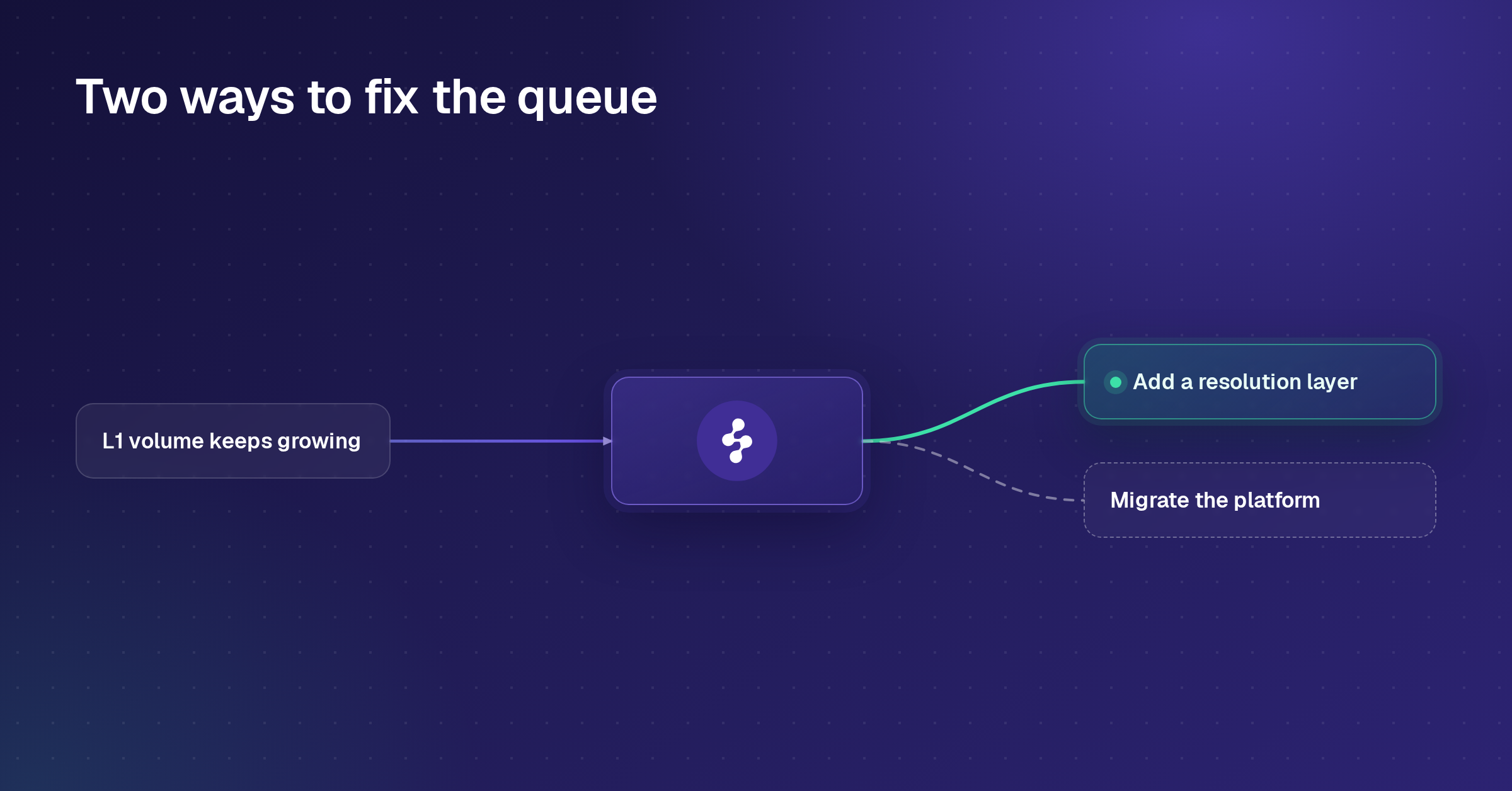
ITSM has split into two purchases. A system of record holds tickets, changes and assets. An AI resolution layer sits on top and resolves requests before a human reads them. Which camp you are in decides your shortlist more than any feature grid does, and the check that settles it is at the end of this piece.
The two camps: ITSM platforms vs the AI ITSM layer
An ITSM platform is your system of record. It is where tickets live, where change requests get approved, where the asset database sits, and it is the source of truth your auditors ask about. Most IT service management software sits in this camp, and so do seven of the ten tools below.
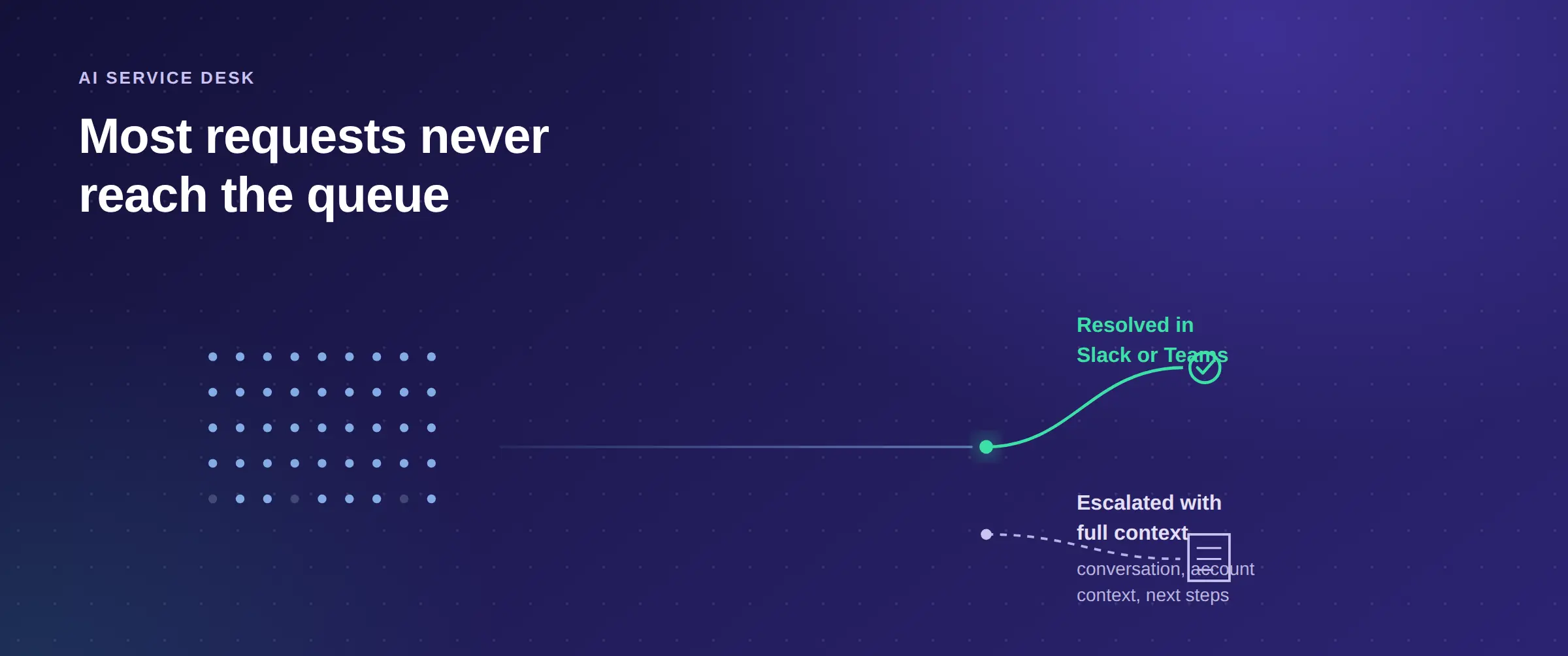
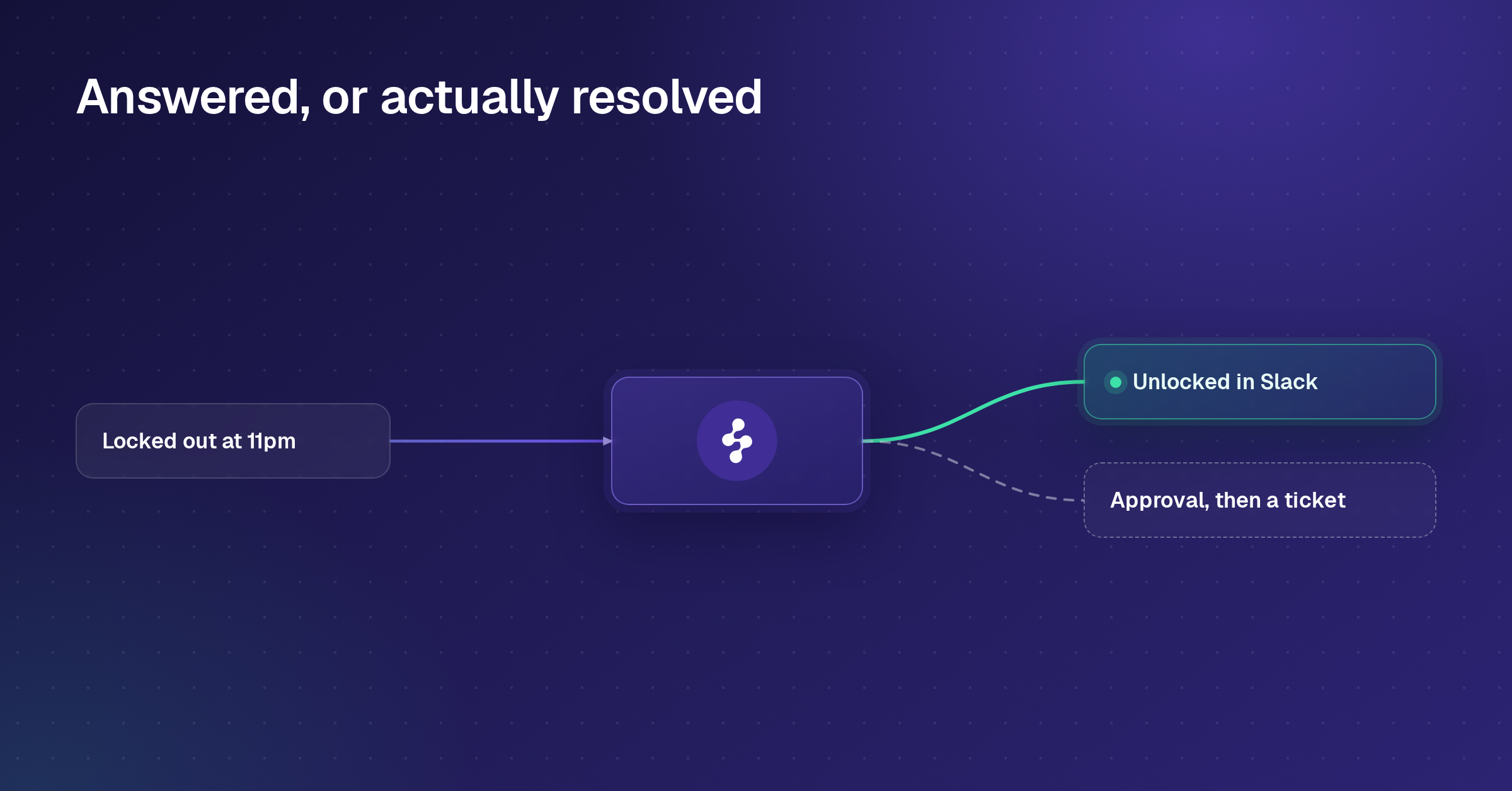
An AI ITSM layer is a different purchase. It sits on top of that system and resolves the request itself, completing the password reset, provisioning the access in Okta, answering from your docs, before a human reads a ticket. When it cannot resolve, it escalates into your platform with the full conversation, account context and suggested next steps. Most near-term ITSM automation wins now sit in this layer, and our IT service desk automation use cases walk through them. The wider IT automation software category splits three ways, covering infrastructure ops, workflow and RPA, and AI service automation.
Late 2025 sorted the market. ServiceNow completed its acquisition of Moveworks on December 15, 2025, positioning it as the front door that connects employee requests to workflow fulfillment, and Automation Anywhere acquired Aisera on November 4, 2025, saying the deal would redefine ITSM for the AI era. The two best-known independent AI layers now belong to bigger platforms, which makes vendor independence a live question on any 2026 shortlist.
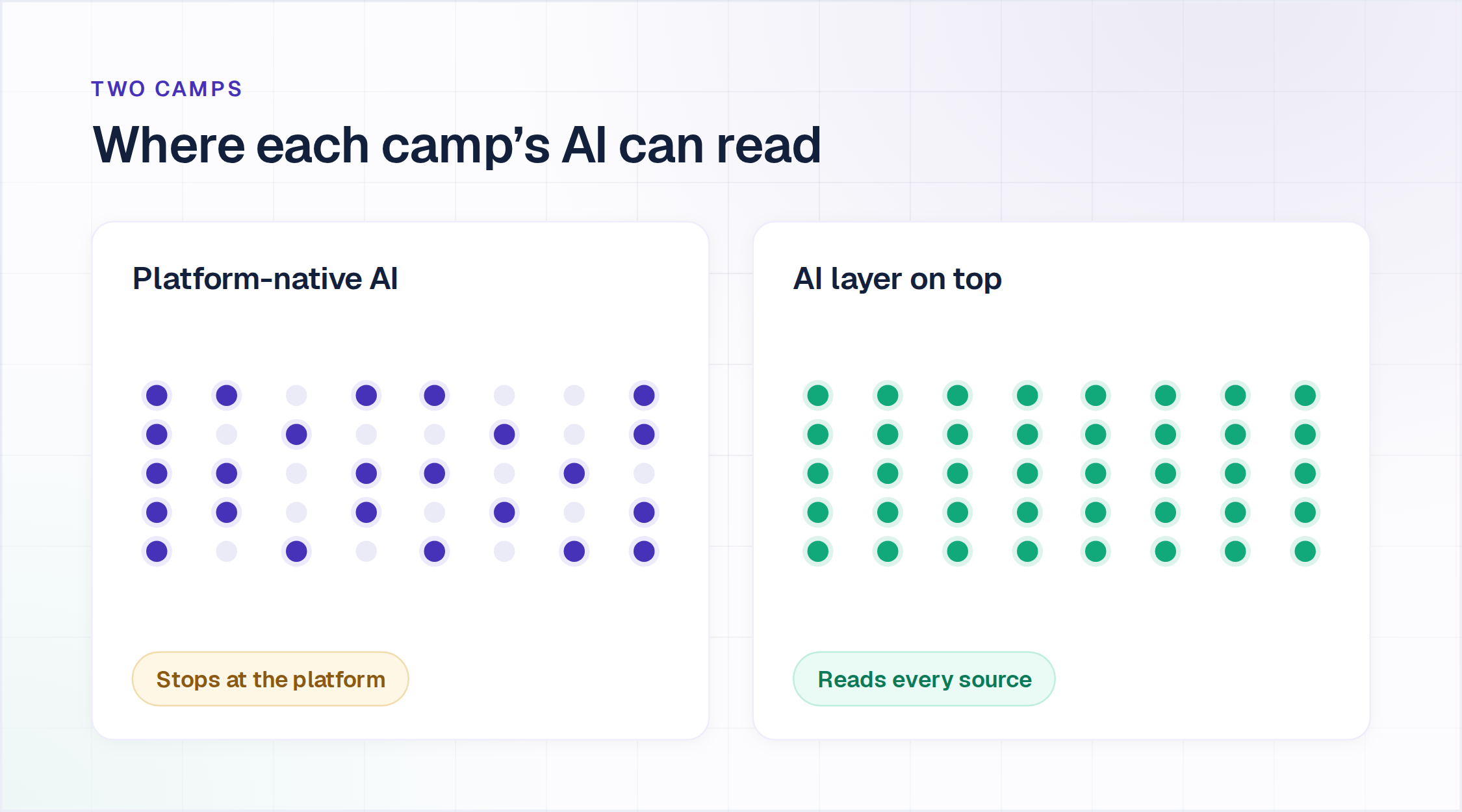
Ranking the two camps side by side as interchangeable is how buying guides mislead. Price a platform on its license plus its implementation; price a layer on what it resolves autonomously and on what survives if you switch helpdesks later.
How we ranked the best ITSM tools
ITSM software grids read the same on every vendor page, so we scored the ten on the things that decide whether a rollout survives contact with reality:
- Deployment time: live in weeks, or a multi-quarter project that needs a partner.
- Admin load after go-live: what it takes to keep workflows, catalogs and AI behavior current.
- Resolution depth: whether the AI resolves requests end to end or drafts and routes for humans to finish.
- Cross-stack reach: whether knowledge and actions span Confluence, SharePoint, identity systems and past tickets, or stop at the platform's own data.
- Channels: whether employees get resolved inside Slack and Microsoft Teams, where the requests actually start.
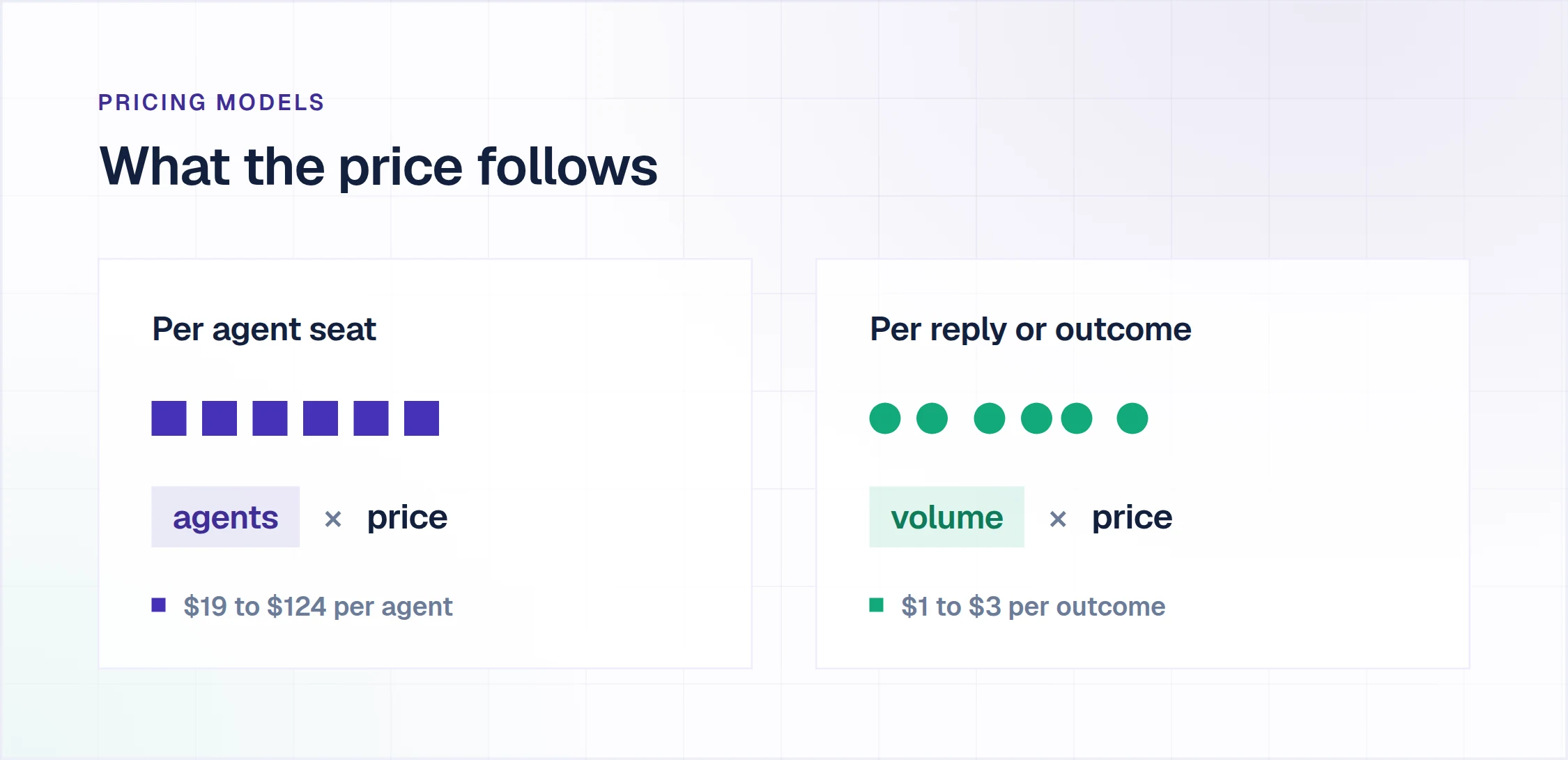
- Pricing transparency: published prices beat quote gates, and AI included beats AI sold as an add-on.
Every price below comes from the vendor's own pricing page, fetched August 31, 2026, and quote-only vendors are stated as exactly that. Ratings link to each tool's live G2 reviews page, pulled the same day, with Gartner Peer Insights as the analyst cross-check, and where a review count is too thin to mean much, we say so.
ITSM tools compared at a glance
The ITSM tools comparison below covers all ten of the best ITSM tools in 2026 on the five dimensions that decide most shortlists. The deep dives follow.
| Tool | G2 | Deploys In | AI Included? | Starting Price |
|---|---|---|---|---|
| Enjo | 4.9/5 (5) | Days to weeks | Yes, every plan | Free, then $95/mo |
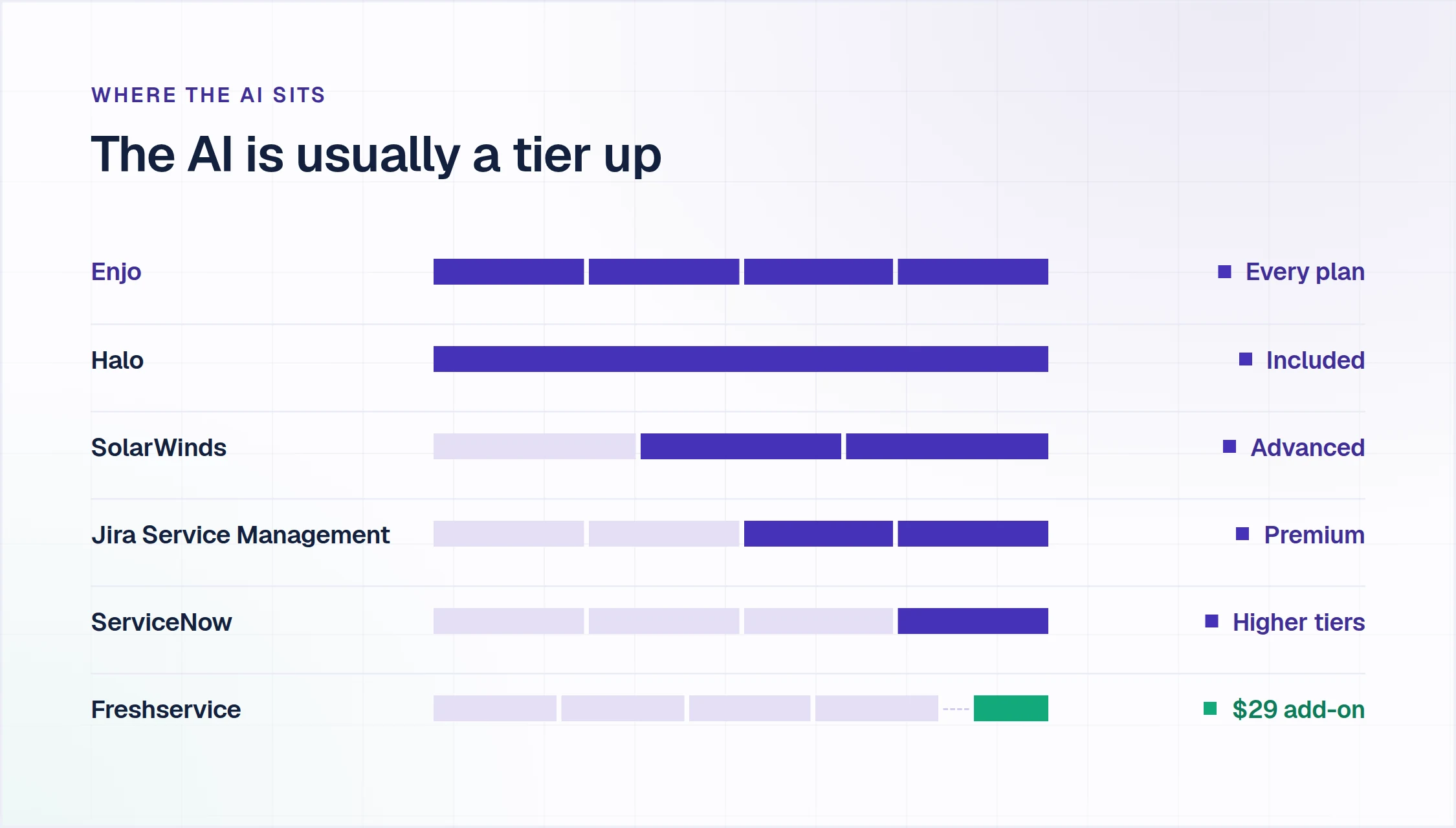
| ServiceNow | 4.5/5 (1,956) | Months | Now Assist, higher tiers | Custom quote |
| Jira Service Management | 4.3/5 (989) | Weeks to months | Virtual agent, Premium | Free (3 agents), $20/agent/mo |
| Freshservice | 4.6/5 (1,354) | Days to weeks | Freddy, $29/agent add-on | $19/agent/mo, no free plan |
| ManageEngine ServiceDesk Plus | 4.2/5 (251) | Weeks | AI on higher editions | Free (5 techs), from $13/tech/mo |
| SolarWinds Service Desk | 4.3/5 (786) | Weeks | Virtual agent, Advanced | $39/tech/mo |
| Halo (formerly HaloITSM) | 4.8/5 (22) | Weeks | Halo AI included | £66/agent/mo, USD not published |
| Atomicwork | 4.0/5 (1) | Weeks | AI Coworkers included | $25,000/yr |
| Moveworks (ServiceNow) | 4.4/5 (126) | Weeks to months | Yes | Custom quote |
| Aisera (Automation Anywhere) | 4.4/5 (146) | Months | Yes | Custom quote |
Deployment times are vendor-stated or from published customer deployments. Prices are the lowest paid tier at list, verified from each vendor's own pricing page. Halo publishes in GBP only, so no USD figure is confirmed. G2 ratings show the review count, since a rating from one review and a rating from 1,900 are different things.
Volume is usually the problem, not the platform. Book a demo and see what an AI resolution layer removes from your queue before you price a migration.
The 10 best ITSM tools for IT teams in 2026
The numbering is for scanning, not a strict rank; which of the top ITSM tools fits you depends on your camp.
1. Enjo
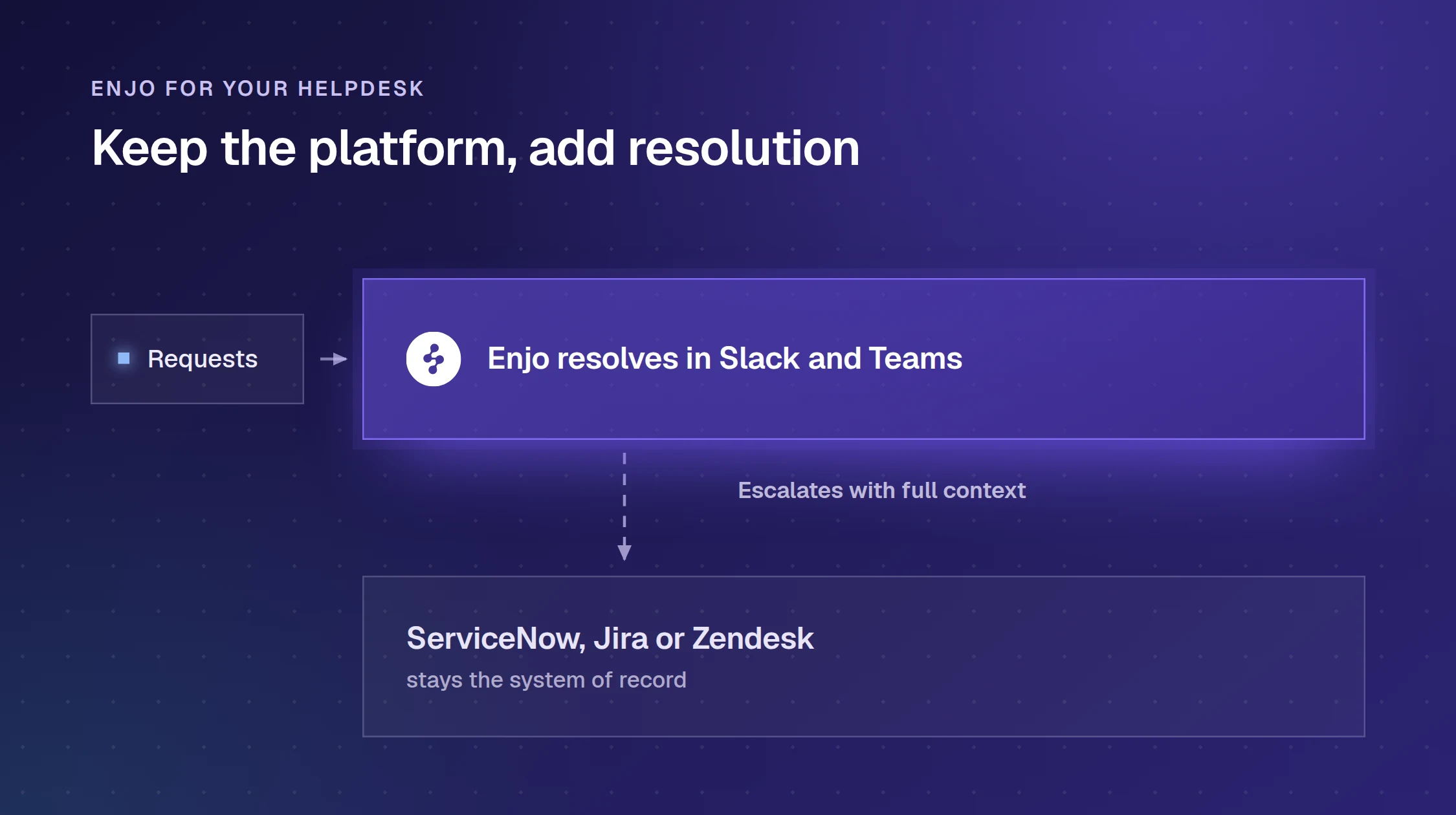
Enjo is an AI Support Agent that resolves employee IT requests end to end in Slack and Microsoft Teams and escalates into the helpdesk you already run; it is built by us, so judge it on the proof.
Best for: mid-market IT teams whose ServiceNow, Jira Service Management or Freshservice works fine, but whose L1 volume does not.
Key capabilities:
- Resolution in chat: resolves password resets, software access and policy questions inside Slack and Teams through Enjo IT Service, with every answer grounded in your knowledge and carrying a citation.
- AI Actions: unlocks accounts and provisions access in Okta, creates, looks up and updates tickets in Jira and ServiceNow, and calls custom APIs, so requests get resolved rather than rerouted.
- One knowledge layer: indexes Confluence, SharePoint, Google Drive, Notion and past tickets across systems, so the agent, your human team and self-service all answer from the same source.
- AI Flows: multi-step automations with explicit fallbacks for the moments the agent is not confident.
- Escalation with context: the incumbent helpdesk receives the full conversation, account context and suggested next steps, and Agent Assist supports your people from inside the Jira Service Management, ServiceNow or Zendesk agent view.
- Guardrails and Audit Log: every response and action is policy-bounded, logged and searchable.
- Insights and Desk Assessment: deflection, resolution and ROI reporting, plus a Desk Assessment that quantifies the automation opportunity from your own ticket history before you commit.
In production: Aurora, a 2,500-employee autonomous vehicle company, resolves 63% of requests autonomously and cut resolution time by 45%.
Pricing: usage-based, per AI reply, with unlimited human agent seats on the published plans. The Free plan is permanent, includes 200 AI replies a month and needs no credit card; paid plans are $95/month for 1,000 replies and $295/month for 3,000, with extra replies at $0.05, published in full at enjo.ai/pricing.
Scope: Enjo is an AI layer, not a ticketing platform. It does not replace the helpdesk as the system of record, which is the point rather than a limit: you keep the platform you run and add resolution on top of it.
2. ServiceNow
ServiceNow is the reference platform for enterprise ITSM: incident, problem, change and request management with a real CMDB on one data model.
Best for: large enterprises with complex, multi-department service management and dedicated admins to run it.
Key capabilities:
- Full ITIL suite: incident, problem, change, request and asset management with deep governance on one data model.
- Now Assist for ITSM: AI summaries, generation and routing inside platform workflows.
- AI Agents and Otto: autonomous triage and investigation of routine incidents, fronted by a conversational assistant.
- ITOM tie-in: infrastructure events generate and route incidents automatically.
Pricing: custom quote only; servicenow.com publishes no list prices (confirmed August 31, 2026). Third-party trackers have historically placed ITSM licensing at $70 to $200+ per fulfiller per month; treat those figures as unconfirmed.
Where it falls short: it is heavy and expensive, implementations run months, and the newest AI sits in higher tiers. If you run ServiceNow and the pain is volume, Enjo for ServiceNow adds resolution in weeks without re-platforming.
Still weighing the platform itself? See the 9 best ServiceNow alternatives →
3. Jira Service Management
Jira Service Management (JSM) is Atlassian's ITSM, built on the platform your engineers already use, so dev and IT share one system.
Best for: teams standardized on Atlassian, or IT orgs that work tightly with engineering.
Key capabilities:
- ITIL workflows: incident, problem, change and request management aligned to ITIL practices.
- Virtual service agent: included on Premium and Enterprise with 1,000 assisted conversations a month, then $0.30 per assisted conversation.
- Rovo AI: AI search and chat available from the Standard tier.
- Assets on Premium: asset and configuration management arrive at the Premium tier.
Pricing: Free for up to 3 agents; Standard at $20 per agent/month and Premium at $51.42 per agent/month on monthly billing, with annual billing up to 17% less; Enterprise is custom, billed annually (fetched August 31, 2026).
Where it falls short: the ITSM features you actually want, the virtual service agent and assets, sit at Premium, the configuration curve is steep, and most teams end up budgeting for Marketplace apps on top.
4. Freshservice
Freshservice is Freshworks' mid-market ITSM suite: ticketing, asset management and automation in one product that teams can stand up quickly.
Best for: 50 to 1,000-employee IT teams that want a capable platform without enterprise weight.
Key capabilities:
- ITIL modules out of the box: incident, change and problem management without heavy setup.
- Asset management: hardware and software tracking tied directly to tickets.
- Orchestration: workflow automation across third-party apps.
- Freddy AI: the Copilot is a $29 per agent/month add-on, and the classic Freddy AI Agent sessions come bundled only at Enterprise.
Pricing: per agent, billed annually: Starter $19, Growth $49, Pro $99, Enterprise custom. There is no free plan, only a 14-day trial (fetched August 31, 2026).
Where it falls short: per-agent pricing scales with headcount rather than with work automated, and the AI most buyers are shopping for is metered separately on top of the seat price.
5. ManageEngine ServiceDesk Plus
ManageEngine ServiceDesk Plus delivers broad ITIL coverage at a fraction of enterprise pricing, in the cloud or on-premises.
Best for: cost-conscious IT teams that want solid ITIL basics without an enterprise contract.
Key capabilities:
- Core ITIL modules: incident, problem and change management, with project management at the Enterprise edition.
- Assets and CMDB: asset tracking included from Professional, with CMDB capabilities in higher editions.
- Self-service portal: an employee request and knowledge portal on every edition.
- Cloud or on-premises: the same editions deploy either way, unusual on this list.
Pricing: Standard from $13 per technician/month, Professional from $27, Enterprise from $67, and a free Standard edition covers up to 5 technicians (fetched August 31, 2026).
Where it falls short: the sharpest AI capabilities trail the newer entrants, the interface shows its age, and the add-on model means real costs climb as you switch on the modules you actually wanted.
6. SolarWinds Service Desk
SolarWinds Service Desk is a SaaS ITIL service desk with incident, change, CMDB and asset management from its entry tier, and unlimited requester accounts on every plan.
Best for: IT teams that want a straightforward, transparently priced service desk and can wait on AI until the upper tiers.
Key capabilities:
- Full core on Essentials: incident management, knowledge base, service portal, change management and CMDB at the entry price.
- Virtual agent from Advanced: plus AI-generated resolution summaries and runbooks.
- Premier AI set: AI incident summaries, AI-guided solutions and AI-generated responses at the top tier.
- Unlimited requesters: employees submitting requests never consume paid licenses.
Pricing: Essentials $39, Advanced $99, Premier $124, per technician per month billed annually, with a 30-day trial (fetched August 31, 2026).
Where it falls short: the AI worth buying sits two tiers up, and at $124 per technician the Premier math approaches enterprise-suite territory.
7. Halo (formerly HaloITSM)
Halo, rebranded from HaloITSM in 2026, is an all-inclusive ITIL-aligned suite: one license covers ticketing, automation, CMDB, projects and its AI features, with no feature tiers.
Best for: mid-market teams that hate add-on pricing and want every module in one number.
Key capabilities:
- All-inclusive license: every capability ships in the one price, no editions to compare.
- Halo AI included: AI agents, suggested replies, sentiment analysis and AI triage as standard.
- Named or concurrent licenses: a shared concurrent pool can cut real license counts for follow-the-sun teams.
- 30-day full trial: all modules open, no card required.
Pricing: the pricing page displays £66 per agent/month (fetched August 31, 2026); a USD figure is not published, so confirm the dollar rate with the vendor.
Where it falls short: its ecosystem, marketplace and review footprint are far smaller than the big three here, and the fresh rebrand means your procurement paperwork may reference two names.
8. Atomicwork
Atomicwork is an AI-first service management platform built so its AI Coworkers, rather than a ticket queue, handle the first line, aimed at teams modernizing off legacy ITSM.
Best for: companies replacing a legacy ITSM outright and committing to an AI-led operating model.
Key capabilities:
- AI Coworkers: resolve requests in Slack and Teams, with two included on the entry plan and more at $499 per worker/month.
- Full ITSM modules: incident, change, problem and asset management behind the AI front end.
- Outcome pricing: knowledge answers at $1, access automation at $2 and service resolutions from $3 per outcome.
- Bring your own platform: runs on ServiceNow or JSM without a platform fee.
Pricing: now published: Professional at $25,000/year with 25,000 credits and up to 250 end users; Business and Enterprise are custom (fetched August 31, 2026).
Where it falls short: the $25K floor and outcome math make it a committee-sized decision, and with a single G2 review its public validation still leans on Gartner Peer Insights and named customers.
9. Moveworks (now part of ServiceNow)
Moveworks was the best-known independent AI assistant for enterprise IT, and since December 15, 2025 it is a ServiceNow company being unified into the Otto front door.
Best for: enterprises already on ServiceNow, or heading there, that want the most proven enterprise AI layer.
Key capabilities:
- Conversational assistant: employee support across Slack and Teams at 10,000-plus-employee scale.
- Enterprise search: answers grounded across enterprise content sources.
- Agentic reasoning: multi-step task handling across connected systems.
- ServiceNow integration: progressively native to the Now Platform and Otto.
Pricing: custom, and now sold within ServiceNow's portfolio (confirmed August 31, 2026).
Where it falls short: the independence that defined it is gone; teams on Jira Service Management or Freshservice backends now face real roadmap uncertainty about non-ServiceNow depth.
Not heading to ServiceNow? See the 6 best Moveworks alternatives →
10. Aisera (now part of Automation Anywhere)
Aisera is an enterprise AI service platform spanning IT, HR and customer service, acquired by Automation Anywhere on November 4, 2025.
Best for: large enterprises running one AI program across IT, HR and finance with the budget to match.
Key capabilities:
- Multi-domain AI agents: service automation across IT, HR and customer service from one platform.
- Runs on your stack: operates on top of ServiceNow, Atlassian and other systems of record.
- Agentic orchestration: coordinates multi-step, multi-agent workflows for large rollouts.
- Enterprise integration surface: broad connector coverage built for complex environments.
Pricing: custom and sales-led; Aisera publishes no list pricing (confirmed August 31, 2026).
Where it falls short: the platform predates generative AI and shows it, with heavier configuration and slower deployments than the GenAI-era layers, and the acquisition adds its own roadmap questions.
Best enterprise IT service management systems
For a large organization, the enterprise IT service management system decision usually lands on ServiceNow for depth and governance, Jira Service Management Enterprise for Atlassian-standardized orgs, or Freshservice Enterprise for a lighter suite, with Moveworks and Aisera as the enterprise AI layers above them. Four more platforms earn a mention even though they did not make the ten.
BMC Helix pairs ITSM with AIOps and event correlation for process-heavy enterprises, on custom pricing. Ivanti Neurons bundles service management with endpoint and patch management, a fit when the service desk also owns device security, also quote-only. SysAid packs help desk, assets and a GenAI copilot into one mid-market product on custom pricing. Motadata ServiceOps is an ITIL-aligned value pick with cloud and on-premises editions, sold per technician by quote.
Two common questions round this out: Microsoft sells no dedicated ITSM suite, so teams asking usually want service management inside Teams, which several tools here deliver, and none of the ten is open source, a category anchored by iTop and OTRS.
The best AI ITSM tools on this list
AI ITSM means the resolution work is done by an AI agent: reading the request, answering from governed knowledge, taking the action in connected systems, and escalating with context when it is not confident. The best AI ITSM tools here are the dedicated layers, Enjo, Moveworks and Aisera, plus Atomicwork as the AI-first platform, and how the AI service desk mechanics work under the hood is covered in our explainer.
The platforms answer with native AI tiers instead: Now Assist, JSM's virtual service agent, Freddy AI, Halo AI and SolarWinds' virtual agent. Most sit behind upper tiers or per-agent add-ons, so price the AI you will actually use, not the entry seat. Agentic ITSM, the term you will meet on every 2026 vendor page, describes the same shift with more autonomy: AI agents for ITSM that plan and execute multi-step work across systems rather than answering single questions.
How to choose an ITSM tool
Start with one question: is the platform the problem, or is the volume the problem? If your workflows and reporting hold up and the pain is repetitive L1 requests, you need a resolution layer, not a migration; ripping out a working IT service management system to fix a volume problem is how six-figure projects become eighteen-month projects. If the platform itself is slow, rigid or missing core ITIL processes, then you are genuinely shopping camp one.
Inside the ITSM software camp, the variables that actually separate these platforms are admin load, ITIL depth and where the AI sits in the pricing. Our Freshservice vs ServiceNow comparison walks the mid-market trade-off, and the ManageEngine vs ServiceNow comparison covers pricing, AI and rollout at the two ends of the market. If most of your requests come from customers rather than employees, our ranking of help desk software covers the customer support suites this list leaves out.
Weigh ITSM implementation time as heavily as the feature list: platform rollouts commonly run months and often need a partner, an AI resolution layer goes live in days to weeks, and the tool resolving requests in week three beats the one still in configuration at quarter end.
The bottom line
The ten ITSM solutions here are built for different jobs, and the honest read on the best ITSM tools of 2026 starts with the camp question. Pull your last twenty resolved requests and mark how many needed knowledge or an action in a system your platform does not own. A high count is a resolution problem and a migration will not fix it.
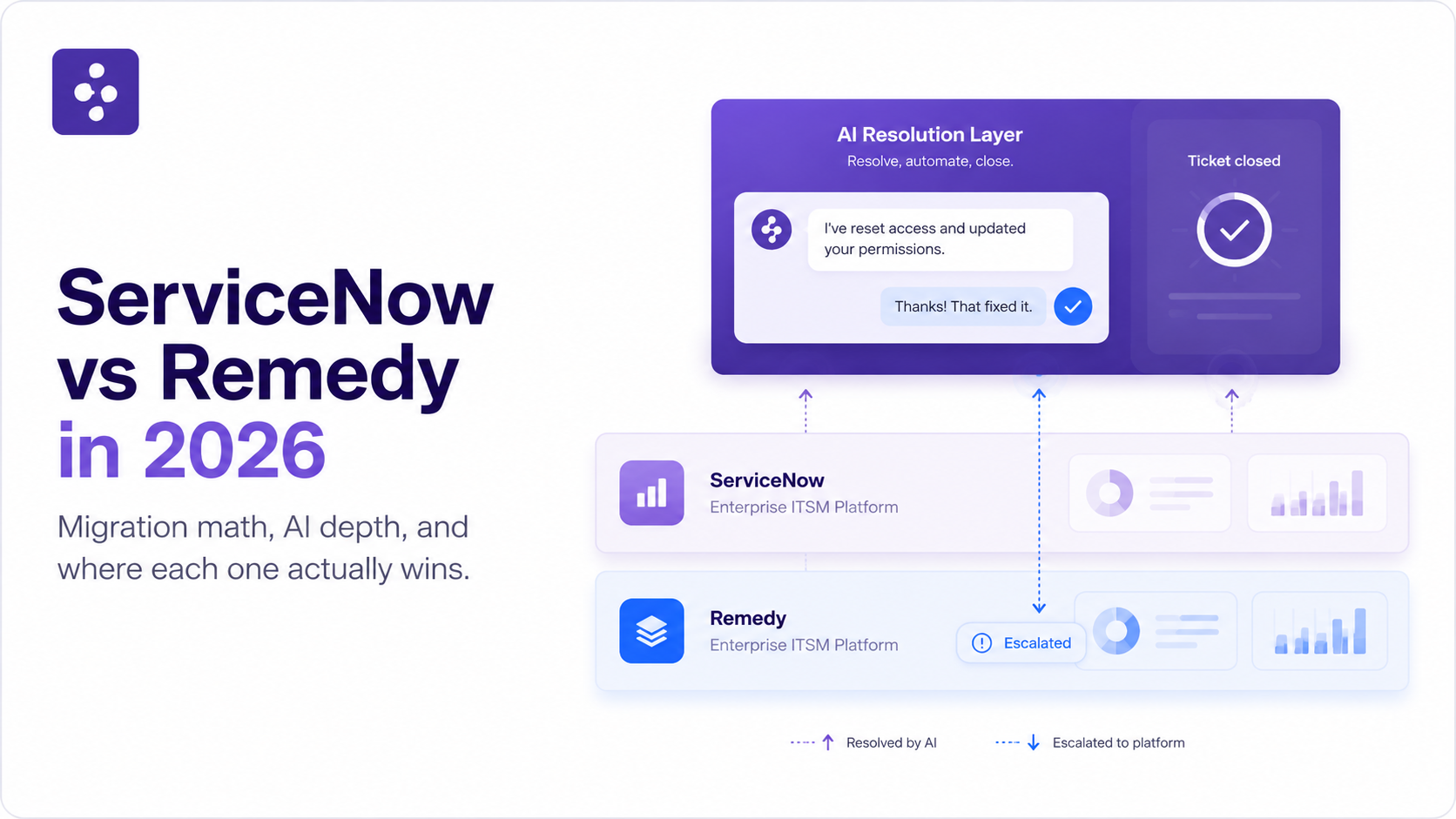
A low count, with workflows and reporting that fight you daily, is a platform problem and the camp-one entries above are the shortlist. Teams replacing a legacy Remedy estate should read the ServiceNow vs Remedy comparison before shortlisting anything else. Teams moving off ServiceNow itself can compare the ServiceNow alternatives, including free and open-source options.
Frequently asked questions
What is an ITSM tool?
An ITSM tool is software that manages how IT delivers and supports services: logging incidents, routing requests, and tracking changes and assets against ITIL practices. In plain terms, it replaces scattered inboxes and spreadsheets with one ticketing system of record where work is captured, prioritized and resolved.
What is the difference between ITSM and ITIL?
ITSM is the practice of running IT as a service, and the software category that supports it; ITIL is the best-practice framework most ITSM tools align to. You buy an ITSM tool, and you adopt ITIL practices inside it, with ITIL 4 as the current version.
Is Jira an ITSM tool?
Jira on its own is a project and issue tracker for engineering teams. Jira Service Management is Atlassian's ITSM product built on the same platform, so when a team says they run ITSM on Jira, they almost always mean JSM.
Do I need a new ITSM platform or an AI layer on top?
If your platform's workflows and reporting already work and the pain is L1 volume, you need a resolution layer on top, not a migration. If the platform is missing core ITIL processes or fighting you daily, shop for a new system of record, and decide the AI question separately: the best AI ITSM tools run on top of whichever platform you keep, and the native AI you inherit is rarely the one you would pick.
What is the most popular ITSM tool?
ServiceNow is the most widely adopted enterprise ITSM platform, with the largest analyst presence and 1,956 G2 reviews at 4.5/5 as of August 2026. Adoption and fit are different questions, and the second one depends on whether your constraint is platform capability or ticket volume.